
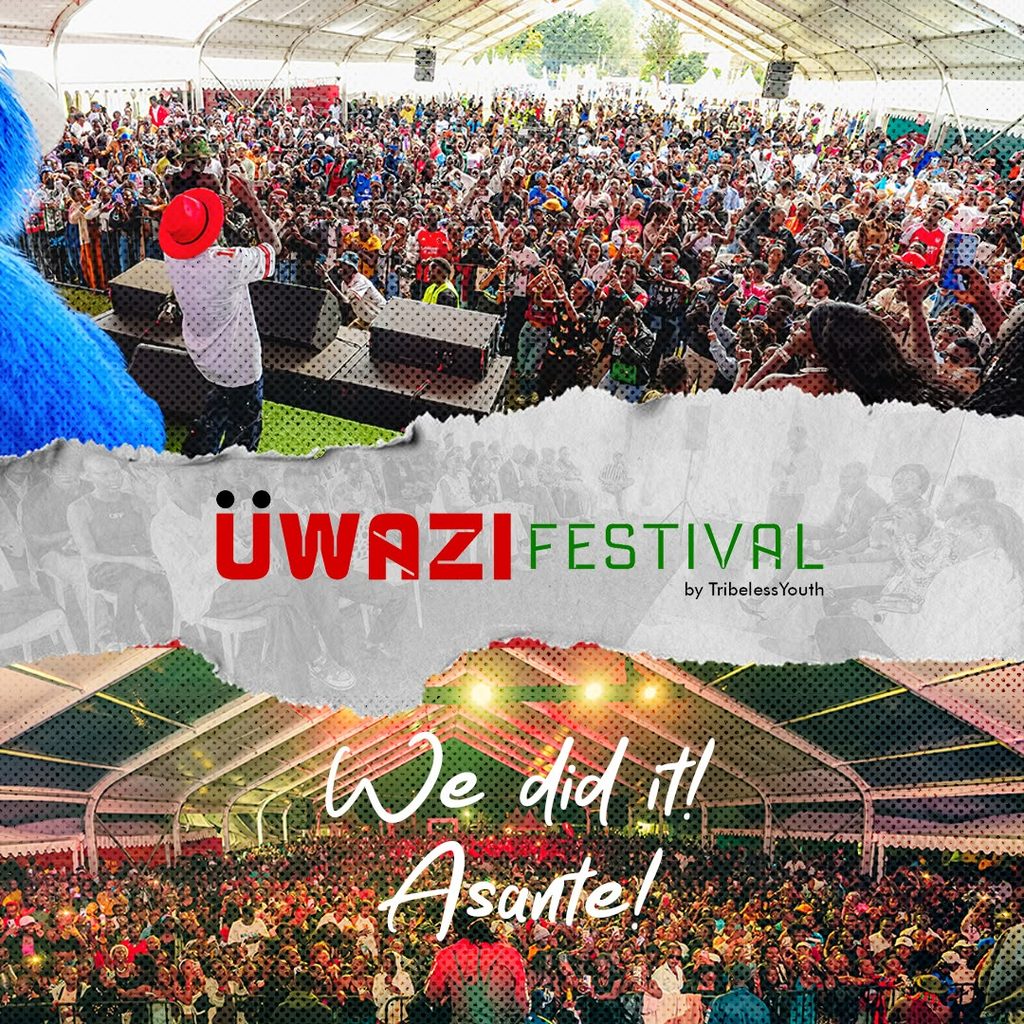
‘’Which Way Kenya?’’ That was the question hanging over the Rift Valley Sports Club on the
morning of 19 September 2026. By the time participants began streaming into the venue, it was clear that this would be more than a day of conversations. There were questions to ask,
frustrations to air, stories to share and, perhaps, a few uncomfortable truths to confront.
16 years after the promulgation of the Constitution, Kenya finds itself at another crossroads. At Uwazi Festival 2026, that crossroads became the starting point for conversations on democracy, leadership, public finance, political participation, freedom of expression and the role of citizens in shaping the country’s future.
Diana Gichengo, Executive Director of The Institute for Social Accountability (TISA), set the
tone in her keynote address, taking aim at the current state of governance and the direction in which the country is being taken.
But Uwazi was not only about asking what has gone wrong. It was also about remembering how far a movement can travel. At the heart of the festival was the celebration of TribelessYouth@10, a journey that began a decade ago as a simple hashtag on X. 10 years later, it has grown into a community of active citizens, artists, human rights defenders and young people who continue to challenge the status quo and create spaces for conversations around democracy, inclusion and social justice.
That journey provided an important backdrop to the day’s discussions. Ten years of asking
difficult questions also meant confronting some uncomfortable realities about where Kenya stands today.
And there was plenty to talk about.
In Ukumbi wa Bajeti, the question was blunt: Where does our money go?
The conversation quickly moved from public debt and the rising cost of living to the everyday reality of trying to survive in an increasingly expensive economy.
Participants shared personal experiences of what it takes to make ends meet, before the
conversation turned to a subject that has become almost impossible to separate from discussions about public money: corruption.
Procurement emerged as one of the biggest concerns, with participants discussing how
government procurement processes can be manipulated to siphon public resources.
Then came an observation that perhaps captured the contradiction at the heart of the corruption debate: Corruption is often only called corruption when one does not benefit from it.
The session ended not with easy answers, but with demands. Stronger oversight of public
budgets. Fair taxation. Responsible management of public debt. And, above all, full implementation of the Constitution.
While conversations around public finance were heating up, Ukumbi wa Sauti Zetu was
grappling with another question: what happens when citizens use their voices and those in power would rather they remained silent? Artists and activists reflected on the June 25 protests and the intimidation they faced while using their platforms for civic education and public discourse. Some were accused of treason simply for speaking to their audiences about what was happening around them.
The conversation also confronted the darker side of public dissent, including allegations of
police brutality, extrajudicial killings and enforced disappearances.
Rajab Ramadhan shared the story of a police officer’s son who was shot and killed by fellow
officers during the June 25th protests. The story offered a grim reminder of the human cost of political violence and the fear that can accompany speaking out.
With the 2027 General Election approaching, there was no escaping politics. At Ukumbi wa
Uadilifu, participants were confronted with a question that Kenya has wrestled with for decades: Why do bad leaders keep winning?
The answers were uncomfortable but familiar. Tribal politics. Party loyalty. Vote buying.
Corruption. Economic hardship. Political manipulation.
For many young people, economic vulnerability can make political promises difficult to resist, particularly when elections become an opportunity to secure immediate relief rather than demand long-term accountability.
But the conversation pushed beyond the usual blame game. Instead of simply asking why
politicians behave the way they do, participants were challenged to examine their own choices at the ballot.
What kind of leaders are we choosing? And why?
At Rada Kwa Debe Civic Hub, the conversation shifted towards women and political leadership. Aspiring female candidates preparing for the 2027 elections shared the challenges they face in their communities, from deeply rooted stereotypes to perceptions that women are too weak to lead or should remain subjects of governance rather than become decision-makers themselves.
The conversation challenged those assumptions head-on, emphasising that women are leaders in their own right and have an equal role to play in shaping decisions in their communities and the country.
For Nerima Wako, however, the stakes went beyond the next election.
“I don’t want my child to remember 2027 as a violent period.”
It was a simple statement, but it captured one of the biggest questions surrounding the coming election: what kind of country are Kenyans preparing to hand over to the next generation? Of course, Uwazi was never meant to be a day of serious conversations alone. Away from the Ukumbis, people played video games, battled it out over pool tables, took over the trampolines and simply had a good time.
There was laughter, friendly competition and the kind of spontaneous interaction that happens when people are given room to relax and connect outside the seriousness of civic conversations. Because sometimes, building community looks less like a panel discussion and more like a pool game with strangers cheering from the sidelines.
As the stage came alive, attention shifted once again.
The Smart Puppeteers, Wambui the Future, Timeliness and Oeba brought their own
interpretations of the festival’s central question through puppetry, poetry, music and storytelling.
Their performances explored the realities facing young people while reminding the audience that art is not merely entertainment. It can challenge power, start conversations, tell stories that statistics cannot and give people language for experiences they may otherwise struggle to express.
It was perhaps the perfect way to close a day built around the idea that every voice matters.
Uwazi Festival did not provide a neat answer.
Perhaps it was never supposed to.
The question Which Way Kenya? is too big to be settled in one festival, one panel or one
election. It lives in our conversations at home, in our communities, in our institutions, at the ballot box and in the choices we make every day as citizens.
The direction of a country is shaped by those in positions of power, but it is also shaped by
everyone who votes, speaks, organises, creates, challenges, questions and refuses to look away.
That is perhaps the real spirit of Uwazi Festival.
Not having all the answers.
But creating the space to ask better questions.
And as Kenya moves towards another defining election, one question remains with all of us:
Which Way Kenya?